For boilermakers
Tanks, hoppers and silos, plate by plate.
Walls, bottoms, flanges, rings and stiffeners come from plate; legs, ladders and platforms from sections. Kalepis prepares both cuts and tells you what the material will cost.
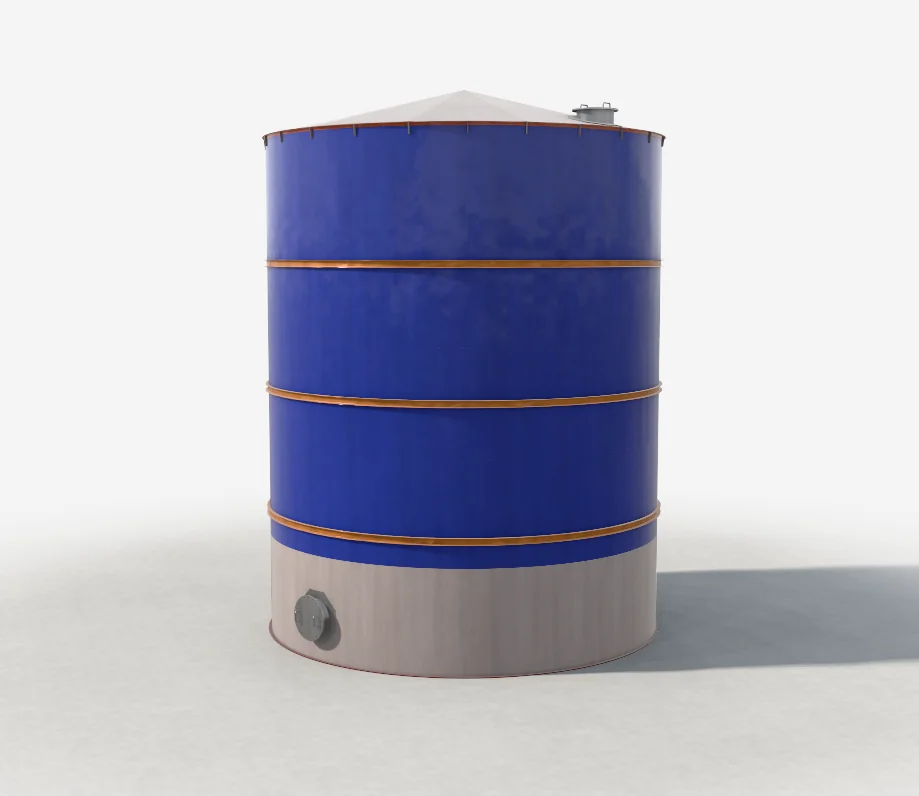
Drag to rotate
Loading the model…
Available now
What you can do today
Available in the application now, on your own lists and drawings.
1
What you bring
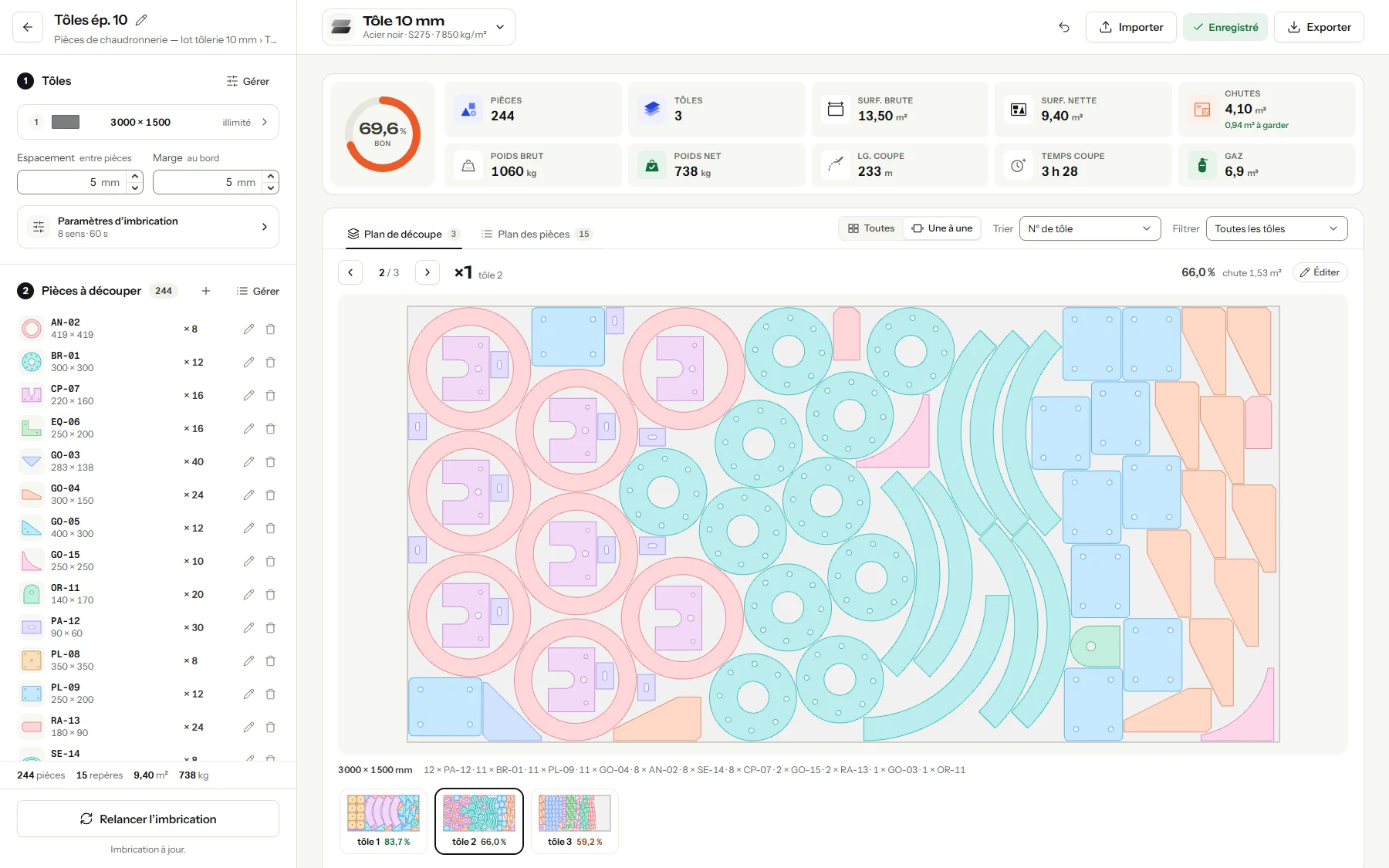
- Your plate parts in DXF: flanges, rings, gussets, bottoms. The mark and quantity are read from the file name.
- Or parametric shapes when you have no DXF: plates, gussets, stiffeners, developed folds.
- The sections of the legs, ladders and platforms, pasted from Excel.
2
What you decide in Kalepis
- Which sheet sizes to buy, thickness by thickness.
- Small parts nested inside the rings, and the layout touched up by hand when you want.
- The reusable offcut you keep for the next job.
3
What your workshop gets back
- A DXF per sheet for the cutting table, with the cut length and the estimated time and gas.
- Cutting plans in PDF and a barcode label per mark.
- A BOQ with gross and net weights and the material cost.
What Kalepis will do for you next
In development. These are intentions, not features yet: each will be announced when it is ready, and will keep the engineer in control.
- In development
Walls and cones developed
The flat pattern of every shell, cone and transition calculated from the 3D tank, ready to nest.
- In development
Thicknesses checked
Wall and bottom thicknesses checked against the design code you apply, with a note the engineer signs.
- In development
Welding and rolling priced
Weld lengths, rolling and inspection counted in the estimate, not only the steel.
- In development
Drawings for the shop
General arrangement and detail drawings produced from the same model.
Have a cutting job you’d like to walk through with us?
Bring a cutting list or a few DXF parts. We’ll look at how you prepare that work today, and go through it together in Kalepis.