Engineering Workflows
BOQ for a steel structure: a worked example, line by line
How to fill in the bill of quantities for a steel structure: quantities taken from the cutting plans, a price per kilo, and a worked example.
On many tenders, the client sends you the bill of quantities, the BOQ, with the quantity and rate columns left empty. The table looks simple. What makes it right or wrong is where the quantities come from.
The columns of a BOQ
A steel BOQ nearly always has the same columns:
- Item: the line number, often grouped by bill (1.1, 1.2…);
- Description: what you supply, for example "IPE 240" or "primer coat";
- Unit: kilo for steel, m² for painting, number for bolts or special plates;
- Quantity;
- Rate;
- Amount: quantity times rate.
Lines are grouped into bills: steel supply, fabrication, protection, transport, erection. The BOQ total is the sum of the bills.
Where the quantities come from
The tempting route is to start from the weight of the parts, the net weight, and add a waste percentage by feel. The number comes quickly, but nobody can say whether it's right.
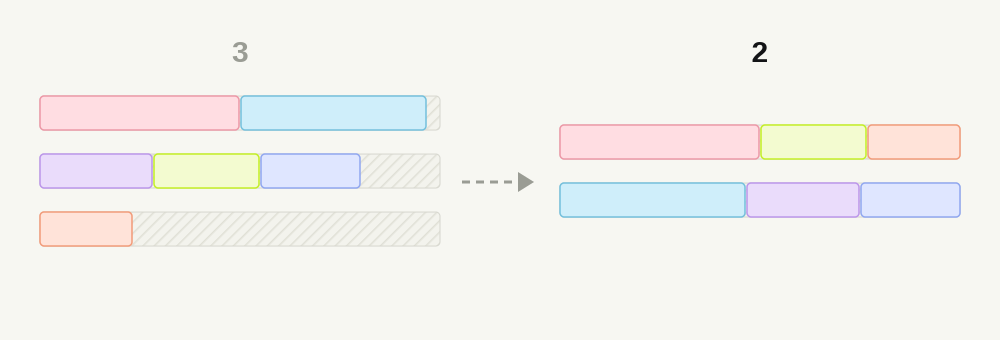
The other route starts from the cutting plans. Each section is laid out on the bars you will actually buy. The weight of those bars is the gross weight, the one your supplier invoices. Waste is no longer an estimate: it's what is left on the bars.
The footbridge, line by line
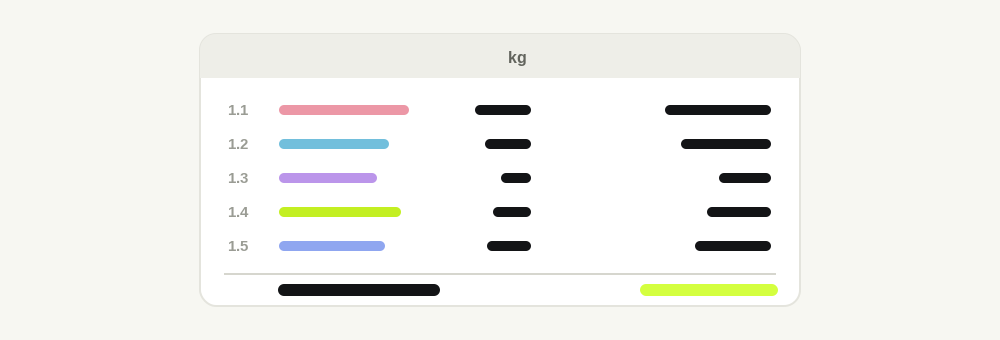
Take the footbridge from the case study: a 14.2 m footbridge with its stairs, railings and bracing, calculated in Kalepis. Five sections, 165 parts, 43 bars. Here is the steel supply bill of its BOQ.
| Item | Description | Unit | Quantity | Rate | Amount |
|---|---|---|---|---|---|
| 1.1 | IPE 240 | kg | 2,344 | $1.30 | $3,047.20 |
| 1.2 | HEA 160 | kg | 1,989 | $1.30 | $2,585.70 |
| 1.3 | UPN 140 | kg | 338 | $1.30 | $439.40 |
| 1.4 | Angle 70 × 7 | kg | 657 | $1.30 | $854.10 |
| 1.5 | SHS 80 × 80 × 4 | kg | 1,023 | $1.30 | $1,329.90 |
| Total, bill 1 | kg | 6,351 | $8,256.30 |
The parts themselves weigh 5,876 kg. The 475 kg difference is the real waste from the cutting plans. Some of it isn't lost: 23.3 m of reusable offcuts go back to the rack.
Net or gross weight in the quantity column?
You'll see both, and the client's BOQ often decides for you.
- The BOQ asks for gross weight. The quantity is what you buy, and the rate is your purchase price plus your margin. That's the table above.
- The BOQ asks for the theoretical weight of the parts. This is common on public tenders. The quantity becomes 5,876 kg, and waste has to go into the rate: $8,256.30 divided by 5,876 kg, or $1.41 per kilo instead of $1.30.
The amount is the same either way. What changes is where the waste hides. With a percentage picked by feel, it hides badly: too low and you pay for it yourself, too high and you lose the job.
Lines that don't come from the cutting plans
A full BOQ doesn't stop at steel. Fabrication, painting, bolts, transport and erection have their own lines. Some of those quantities can still be worked out from the project: the area to paint, the cutting time, the number of parts. The rates are your decisions: your labour rate, your painter, your trucks, your margin.
The BOQ in Kalepis
In Kalepis, the BOQ is built from the project's cutting calculations: bars, plates, gross and net weight, area to paint, cutting time. You add your rates, per kilo, per bar or per sheet, and the estimate exports to Excel with its totals kept as formulas. If the client imposes their own BOQ, you copy the quantities across; they're right, and you know where they come from.