Building Kalepis
Why we started Kalepis with cutting optimization
Our long-term goal is a connected engineering platform. We began with cutting because it's where engineering turns into parts, steel and cost.
People sometimes ask why a company that talks about AI-assisted engineering starts with something as down-to-earth as cutting plans. The short answer: because that's where an engineering decision becomes steel you pay for.
Where the problems show
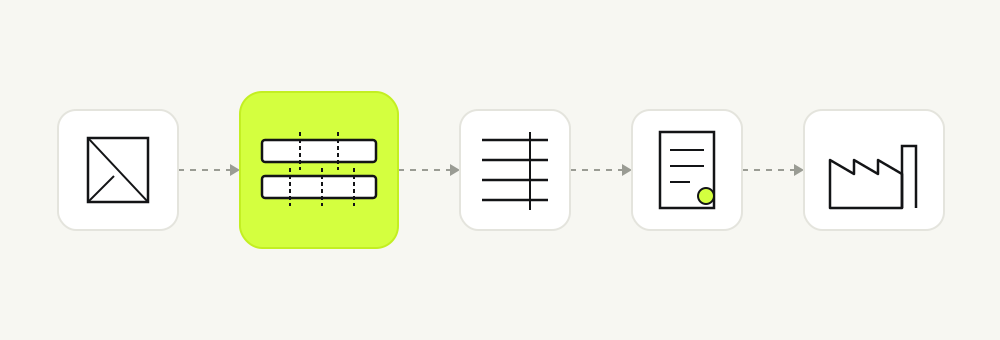
In a fabrication project, many decisions stay abstract for a long time. A section chosen in a calculation. A connection drawn in a model. Cutting is the moment they become concrete: bars bought, sheets ordered, parts labelled for the workshop.
Mistakes made earlier show up here, and they cost money: a forgotten piece, a wrong quantity, a plate nobody laid out, an offcut percentage that was a guess.
A problem you can check
Cutting optimization has a clear right and wrong. A plan either fits the parts on the stock or it doesn't. The quantities add up or they don't. Every bar and every sheet can be counted.
That makes it a good place to build calculation engines carefully, test them on real part lists, and earn trust before taking on problems that are harder to verify, like design or technical analysis.
The day a quantity changed
On a steel-frame job, the workshop cut the column base plates from a list retyped from the drawing. In the retyping, the quantity of one mark went from 8 to 3. Nobody saw it until erection: five columns without a base plate, a site crew waiting, plate ordered in a hurry.
The drawing was right. What broke was the hand-over from one file to the next. Since then, in Kalepis, every result of a job lives in the same project: the mark and quantity are read from the DXF file name, and the cutting plan, the nesting, the BOQ and the labels carry the same mark, without being copied.
It connects to everything else
Cutting plans feed quantities. Quantities feed costs. Costs feed the bid. And once the job is won, the same part list goes to the workshop.
Starting here forces us to get the basics right: parts, stock, quantities and documents that the rest of the platform will need.
What exists today
The application available for demonstration today covers:
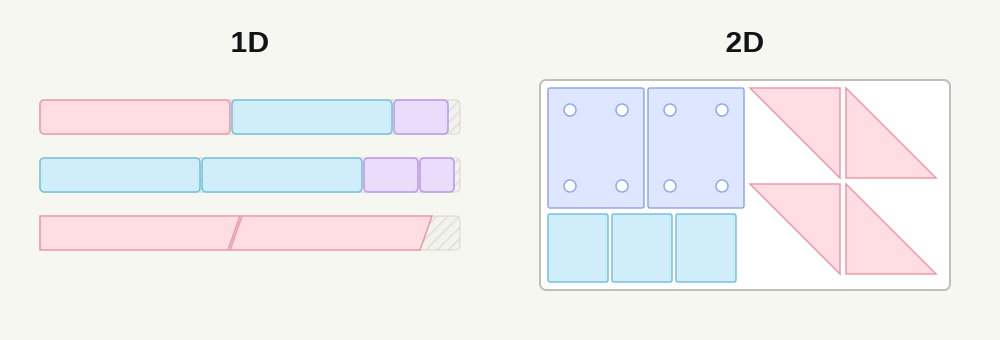
- 1D cutting plans for bars and profiles, and 2D layouts for sheets;
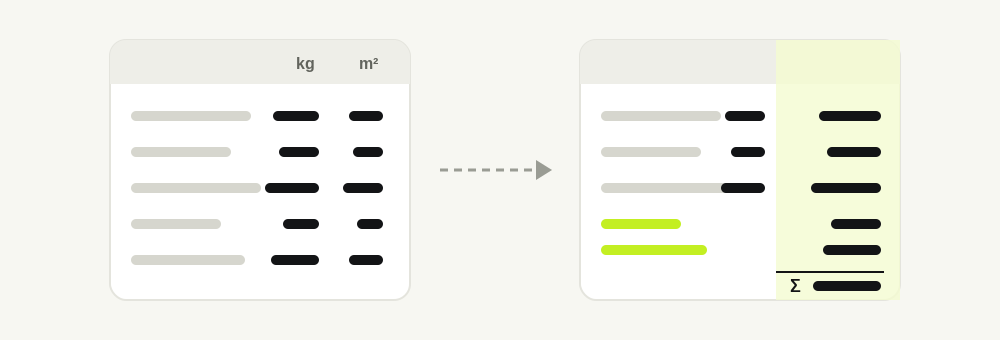
- a BOQ built from the cutting results, where you can add your unit prices;
- documents for the workshop: PDF cutting plans, barcode labels and DXF files for sheets.
It runs as a desktop application for Windows.
What doesn't exist yet
Reading a customer's documents, design, technical analysis, and the AI layer that would connect them: all of this is in development. We'll write about each part when there is something real to show, and not before.
Why it matters to us
We're engineers. We know the hours that go into copying lists from one tool to another, and the quiet worry that a line got lost on the way. Kalepis is our way of removing some of that work, starting with the part of the job we know best.