Cutting & Materials
Steel section weight per metre: finding it and checking it
IPE, HEA, channels, angles, hollow sections: where weight per metre comes from, how to check it from the section area, and why you always buy more.
The weight per metre of a steel section is in every BOQ, and hardly anyone recalculates it. It gets copied from a catalogue, an old spreadsheet or a website, and goes straight into the price. Checking it takes a minute, as long as you know where it comes from.
The rule
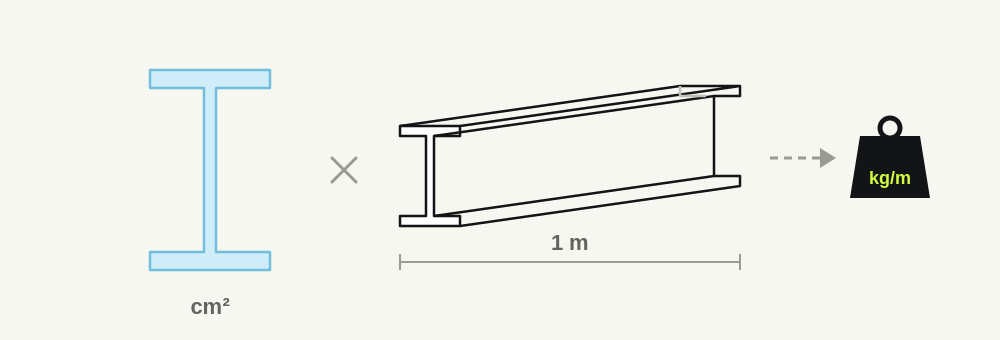
Steel weighs 7,850 kg per cubic metre. One metre of a section therefore weighs its cross-section area times that density. In workshop units:
weight per metre (kg/m) = section area (cm²) × 0.785
For an IPE 240, the section is 39.1 cm²: 39.1 × 0.785 = 30.7 kg/m. That's the figure you'll find in catalogues.
Checking it on a real job
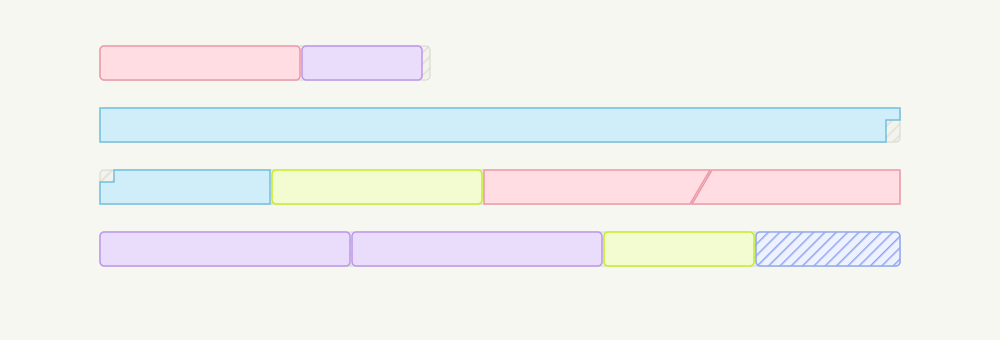
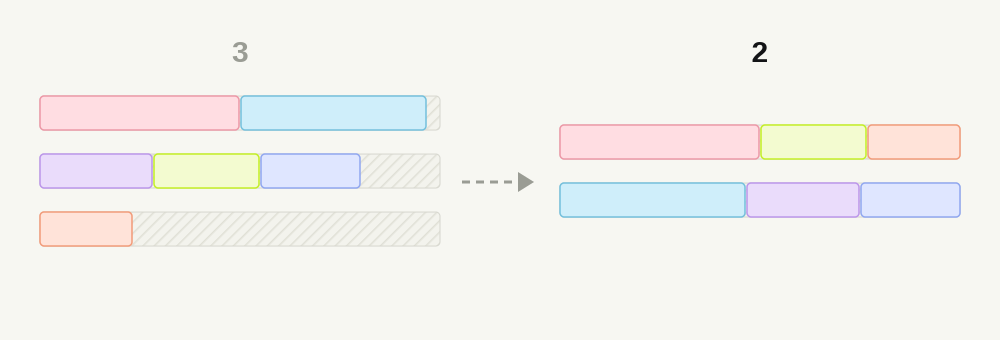
On the footbridge from the case study, Kalepis used one 4,350 mm offcut and six 12 m bars of IPE 240: 76.35 m. The cutting plan gives 2,344 kg, and 2,344 divided by 76.35 is indeed 30.7 kg per metre.
It's the kind of check worth doing on the biggest line of your BOQ. A wrong weight per metre carries through the whole line, and the line into the price.
Where to find the right figure
The weights per metre of common sections are set by standards, together with each section's dimensions:
- IPE, HEA, HEB, UPN: EN 10365;
- angles: EN 10056-1;
- hollow sections: EN 10210-2 for hot-finished, EN 10219-2 for cold-formed. The two don't give exactly the same weight for the same designation, because of the corner radii.
Your supplier's catalogue repeats these values. When in doubt, the supplier's figure wins: they weigh what they invoice. The real mass of a bar can also differ slightly from the theoretical mass, within the rolling tolerances the standard allows.
Theoretical, net and gross weight
Three weights go around, and it pays to know which one you're handling:
- theoretical weight: the length of the part times the weight per metre;
- net weight: the weight of the parts that go to site;
- gross weight: the weight of the bars bought, offcuts included.
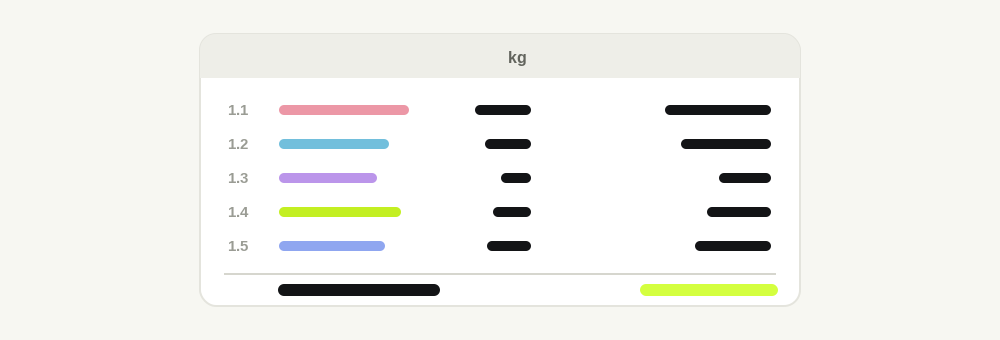
On the footbridge, the parts weigh 5,876 kg and the bars bought 6,351 kg. Gross weight is what you pay for, and it's what belongs in the material cost.
Built-up welded sections
A plate girder has no catalogue line: its weight comes from its plates.
Kalepis counts the weight and paint area of built-up sections like any other section.
And the area to paint
Same logic for painting: the area per metre of a section is its perimeter. It's in the same catalogues, and it matters as much as weight in an estimate. In Kalepis, it comes from the cutting calculation and arrives in the BOQ with the gross and net weights.